 Ant Habitats
Complete Ant Keeping Starter Kit Checklist
Everything a UK beginner actually needs to start their first colony — and the tempting extras you can safely skip for now.
New keepers routinely overspend on their first setup. The truth is that a healthy founding colony needs remarkably little — a test tube, water, and patience will carry most beginner species through their first few months. This checklist separates the genuine essentials from the nice-to-haves.
Prefer to tick items off interactively? Use the savable Starter Checklist.
The essentials (start here)
- A mated queen of a beginner-friendly species. Everything else is housing and food.
- Test tubes (16mm × 150mm) — the founding home. Buy a few; they’re cheap and you’ll rotate them.
- Cotton wool — plugs the water reservoir and seals the tube.
- A test tube rack or stand — keeps tubes upright and dark.
- A dark cover or foil — ants found best in darkness. A wrap of foil or a dedicated tube sleeve works.
- A small outworld (foraging box) — only once you have workers. A ventilated tub with an escape barrier is fine to start.
- Escape barrier — fluon (PTFE) or baby powder + rubbing alcohol painted around the rim.
- Tweezers — for placing food and moving debris without crushing ants.
Food (cheap and simple)
- Sugar source — sugar water, honey water, or a specialist ant nectar. The colony’s energy.
- Protein source — small insects (fruit flies, crickets, mealworm pieces). Feeds the growing brood.
- A shallow dish or bottle cap — to serve food and keep the outworld clean.
Helpful once you’re growing
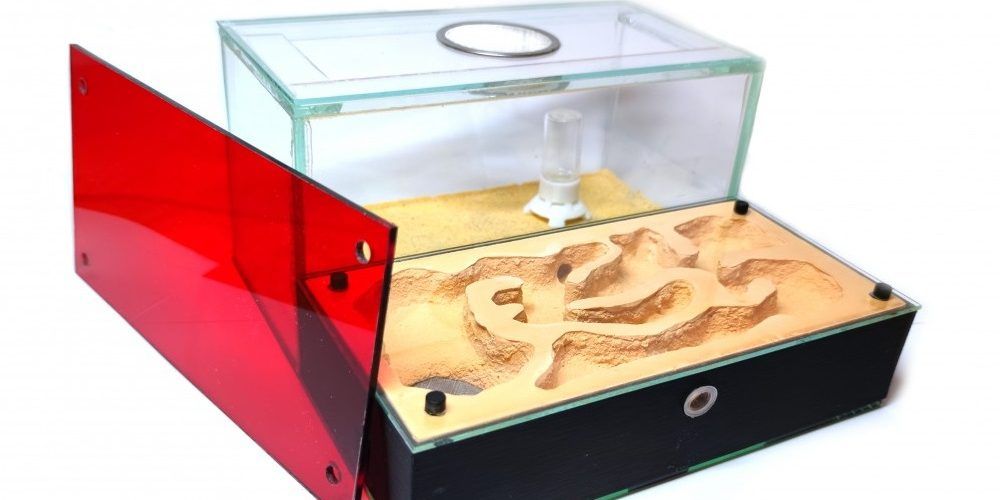
- A proper formicarium (nest) — ytong, acrylic, or 3D-printed. Size it to your colony as it grows.
- Heat cable or mat with a thermostat — gentle warmth (around 24–26°C at the nest) speeds brood development.
- Digital thermometer/hygrometer — to actually know your conditions rather than guess.
- A hydration system — for larger nests that need controlled humidity.
Tempting extras you can skip at first
- Elaborate naturalistic setups — they look wonderful but complicate cleaning and escape-proofing.
- Multiple nests “for later” — buy for the colony you have, not the one you imagine.
- Expensive feeders — a bottle cap does the same job as a designer feeder for months.
A realistic first budget
A sensible UK beginner setup — queen, test tubes, a simple outworld, basic tools and food — typically lands around £40–£70. Add a starter nest and a thermostatically controlled heat cable later and you’re closer to £90–£120. Tick off your exact list on the savable starter checklist.
The golden rule: spend on the queen and your patience, not on gadgets. A well-fed founding colony in a plain test tube outperforms a stressed colony in an expensive nest every time.
Common questions
- What do I actually need to start keeping ants?
- A mated queen, test tubes, cotton wool, darkness, patience, and later a small outworld. A proper nest, heating, and decorative setup can wait until the colony has workers.
- Do ants need a formicarium straight away?
- No. A test tube setup is normally better for a founding queen and small colony. Moving into a large nest too early is one of the easiest ways to create stress and humidity problems.
- How much does a first ant setup cost in the UK?
- A sensible beginner setup is usually around £40 to £70. Adding a nest and thermostatically controlled heat later can push the total closer to £90 to £120.
- Do I need a heat mat or heat cable?
- Not always. Most UK beginner species survive at normal room temperature. If you use heat, always use a thermostat and heat only one side of the nest.
Last updated 30 June 2026