 Ant Habitats
Queen Ant Care & the Founding Stage
How to house, feed, and — crucially — leave alone a founding queen so she raises her first workers successfully.
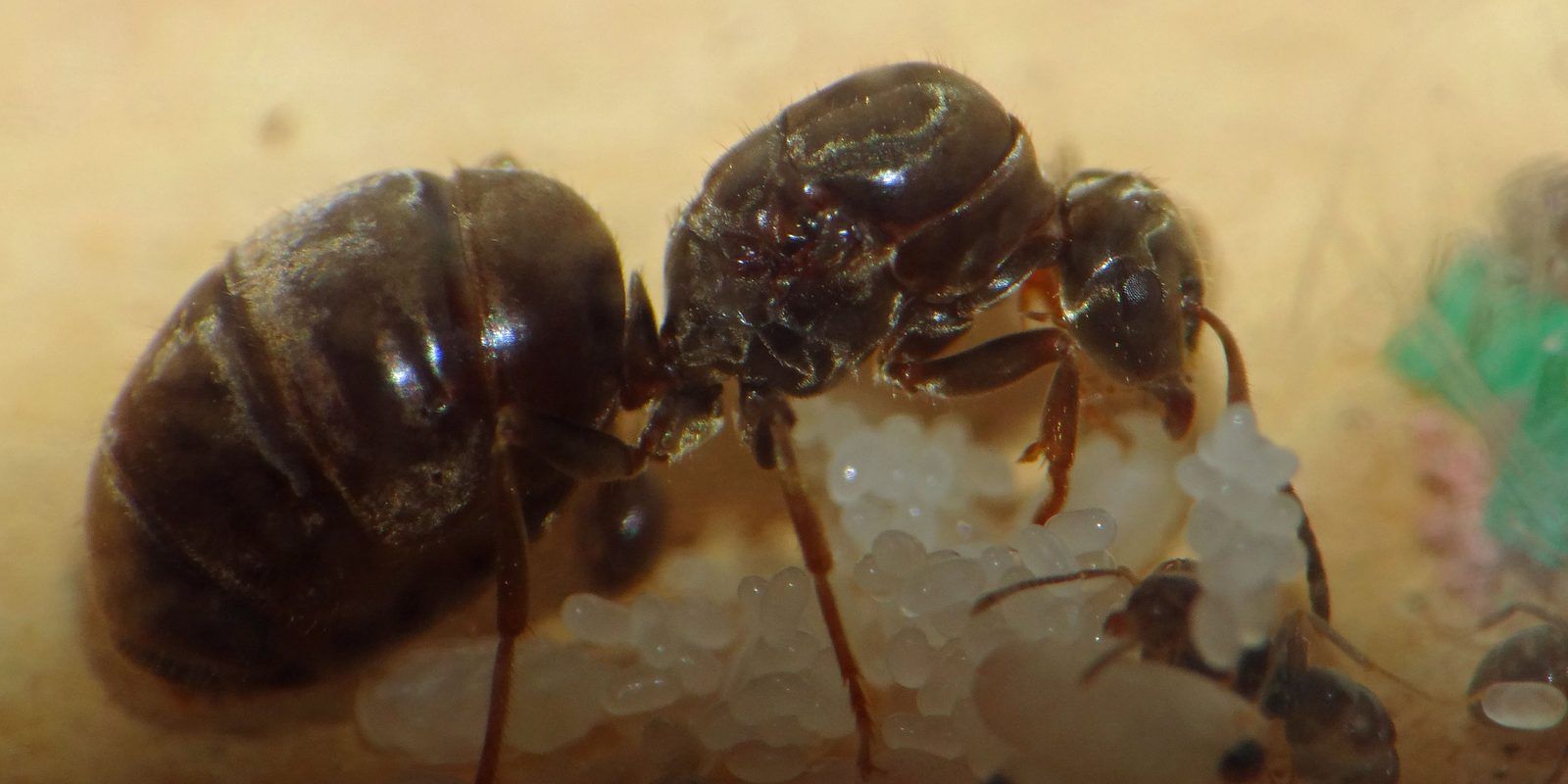
The founding stage is where most beginner colonies are won or lost, and the mistakes are almost always the same: too much light, too much checking, and too much “help.” A claustral queen is astonishingly self-sufficient. Your main job is to create dark, stable, undisturbed conditions and then get out of the way.
Setting up the test tube
The test tube setup is the gold standard for founding queens, and it costs almost nothing.
- Fill roughly one-third of a clean 16mm test tube with water.
- Push a wad of cotton wool down to trap the water, leaving no gap — this is her humidity supply.
- Let it settle, then check no water leaks past the cotton.
- Add the queen, then plug the open end with a second, looser piece of cotton.
- Wrap the tube in foil or slide it into a dark cover, and place it somewhere warm, quiet, and stable.
That’s it. The trapped water keeps the air humid for weeks, and the darkness tells her she’s safely underground.
Claustral vs semi-claustral founding
- Fully claustral (Lasius, Camponotus, most beginner species): the queen seals herself away and raises the first workers using only her body reserves and wing muscles. Do not feed her. Opening the tube to offer food does more harm than good.
- Semi-claustral (Formica, some others): the queen forages a little during founding and benefits from occasional tiny amounts of food. Offer a small drop of sugar water and a fragment of insect every few days.
If you’re unsure which your species is, check its care card — every entry lists the founding type.
The hardest rule: leave her alone
The urge to check on the queen every day is completely natural and completely counterproductive. Every time you unwrap the tube and expose her to light, you stress her — and stressed queens eat their own eggs.
- Check no more than once a week, briefly, in dim light.
- Expect nothing to happen for one to three weeks. Eggs come first, then tiny grub-like larvae, then pupae.
- The first workers (called nanitics) are smaller than normal workers. This is completely normal — they exist only to get the colony started.
Timeline of a typical founding
| Stage | Rough timing | What you’ll see |
|---|---|---|
| Eggs | Days 1–14 | A small white cluster the queen tends constantly |
| Larvae | Weeks 2–4 | Tiny curled grubs, growing slowly |
| Pupae | Weeks 4–7 | Cocoon-like or naked white pupae |
| First workers | Weeks 6–10 | The first nanitics eclose (hatch) |
Timings vary hugely with temperature and species. Gentle warmth (around 24–26°C) speeds everything up; hibernation-timed queens may pause entirely.
When the first workers arrive
Once you have a handful of workers, the colony can start foraging. Now — and only now — connect a small outworld and begin offering sugar and protein. The workers will do the feeding; you just keep the food fresh and the water reservoir topped up.
Red flags worth acting on
- Mould in the tube — usually from food debris. For a founding queen there should be no food, so mould is rare; if it appears, gently move her to a fresh tube.
- The reservoir has dried out — set up a fresh tube and connect the two so she can walk across on her own.
- The queen has stopped tending eggs and seems lethargic for weeks — she may have been unmated or unhealthy. Sadly not every queen succeeds, which is exactly why buying a proven mated queen beats catching your own.
Patience is the whole skill here. A queen left in peace for six weeks will reward you far more reliably than one fussed over daily.
Common questions
- How often should I check a founding queen?
- Check no more than once a week, briefly, and in dim light. Daily checking is stressful and can make a queen eat her eggs.
- Should I feed a queen before workers arrive?
- Fully claustral queens should not be fed before workers arrive. Semi-claustral queens, such as many Formica and Myrmica, benefit from tiny amounts of sugar and insect food.
- How long does it take for the first workers to arrive?
- Six to ten weeks is typical for many beginner species, but temperature, species, season, and hibernation timing can make it faster or much slower.
- What should I do if the test tube dries out?
- Set up a fresh hydrated tube and connect it to the old one so the queen can move herself. Avoid tipping or forcing her unless there is an emergency.
Last updated 1 July 2026