 Ant Habitats
Heating & Humidity Guide
Get temperature and moisture right without gadgets you don't need — and avoid the two most common ways beginners cook or drown a colony.
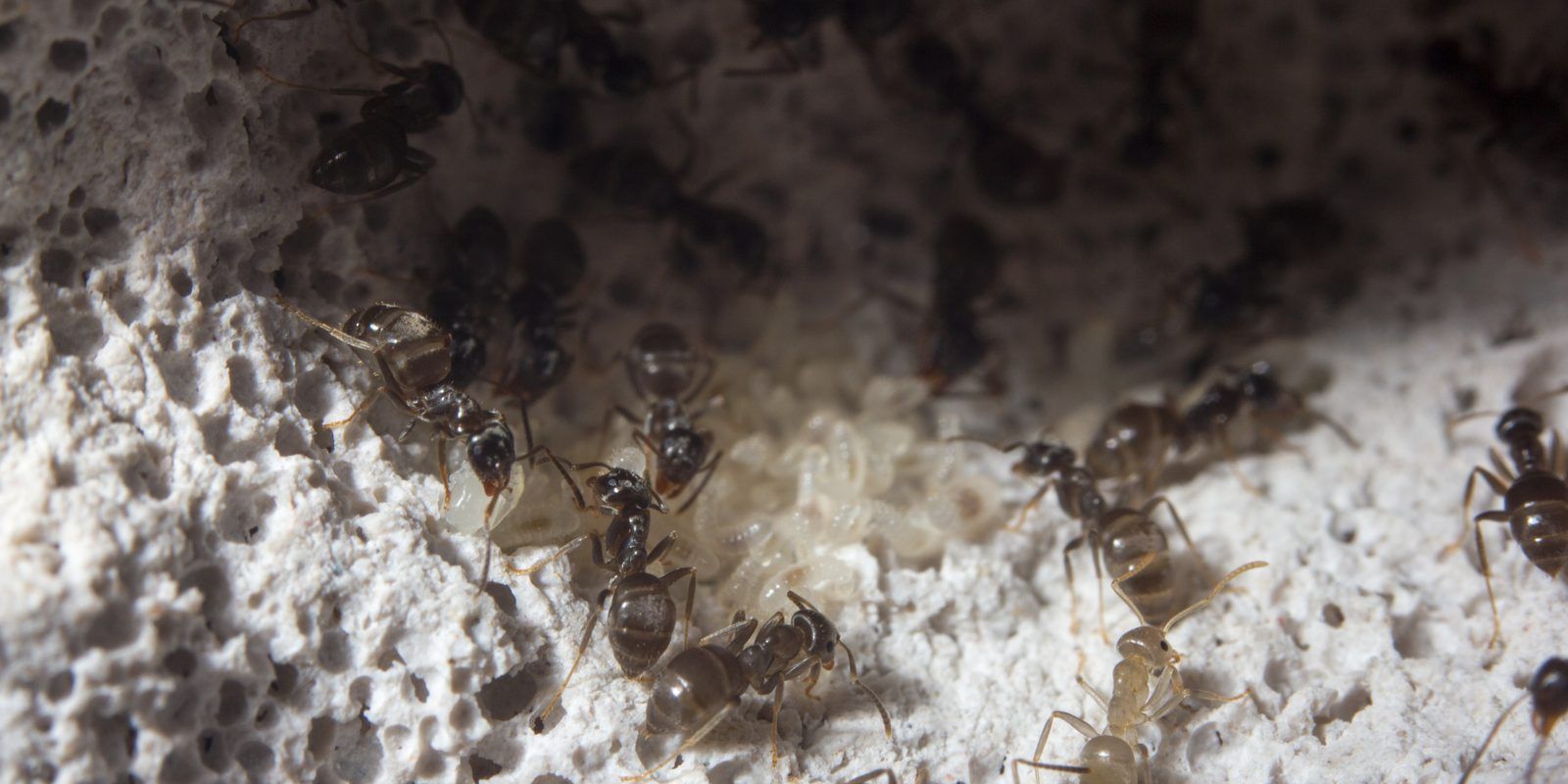
Ants are far more tolerant than most beginners fear. The mistakes that actually harm colonies aren’t “the temperature was a degree off” — they’re overheating a nest with an unregulated cable, or sealing a nest so damp it turns mouldy. Get the fundamentals right and you rarely need to think about it again.
Temperature: warmth speeds growth, it isn’t survival
Most UK beginner species survive perfectly well at normal room temperature. Warmth simply speeds up brood development, so a heated colony grows faster — it doesn’t die without heat.
- Target a gentle gradient, not uniform heat. Warm one end of the nest to around 24–26°C and leave the rest cooler so ants can choose.
- Never heat without a thermostat. An unregulated heat cable or mat can push a nest well past 30°C and cook the brood. This is the single most common way beginners kill a colony.
- Heat the nest, not the outworld. Ants move brood toward warmth; give them somewhere warm inside the nest to move it to.
A simple, safe heating setup
- A heat cable or mat rated for vivarium use.
- A thermostat set to your target temperature, with the probe at the nest.
- Heat applied to one end or one side only.
That’s all. Turn it off during hibernation for species that need a winter rest (see the hibernation section).
Humidity: the test tube already solves it
For founding queens and small colonies, the water-and-cotton test tube keeps humidity ideal automatically. You don’t need a hygrometer to found a colony.
As colonies move into a proper nest, humidity control matters more:
- Gradient again. A good nest has a damp end and a dry end so ants can position brood where they like it.
- Hydrate the nest, not the air. Add water to a nest’s hydration port or a dampened chamber rather than misting everything.
- Match the species. Humidity needs vary a lot — a Camponotus likes it drier than a Myrmica. Each species card lists a humidity guide.
Reading the colony instead of the gauge
Ants tell you if conditions are wrong long before a gadget does:
- Brood piled at the damp end → the nest is too dry overall.
- Brood piled at the dry end → the nest is too wet.
- Workers clustering at the warm spot constantly → they want more warmth; nudge the target up a degree.
- Ants avoiding the warm end entirely → it’s too hot; check the thermostat immediately.
A colony that spreads its brood comfortably across the middle of the gradient has conditions it’s happy with.
Hibernation for UK species
Many native species (Lasius, Myrmica, Formica) naturally slow down or stop over winter and benefit from a cool rest of a few months at around 5–15°C — a cellar, garage, or wine fridge works. Skipping hibernation for these species can shorten a queen’s life. Tropical species don’t hibernate. Your species’ care card states whether hibernation is required.
The two rules that matter most
- Never heat without a thermostat.
- Give a gradient and let the ants choose.
Follow those and you’ll avoid almost every heat- and humidity-related disaster beginners run into.
Common questions
- What temperature is best for beginner ant colonies?
- Most UK beginner colonies do well at normal room temperature. Gentle warmth around 24 to 26°C on one side of the nest can speed brood growth, but it is not essential for survival.
- Can I use a heat mat without a thermostat?
- No. Unregulated heat mats and cables can overheat a nest quickly. Always use a thermostat and give the ants a cooler area to retreat to.
- Should I mist an ant nest?
- Usually no. Hydrate the nest material or water reservoir instead. Misting the whole setup can make conditions unstable and encourage mould.
- What humidity do ants need?
- It depends on the species, but a gradient is more important than a single number. Provide a damp area and a drier area so the colony can place brood where it prefers.
Last updated 2 July 2026